Blog Archives

Tulip Winery – a kosher family owned winery in the Galilee with an altruistic purpose
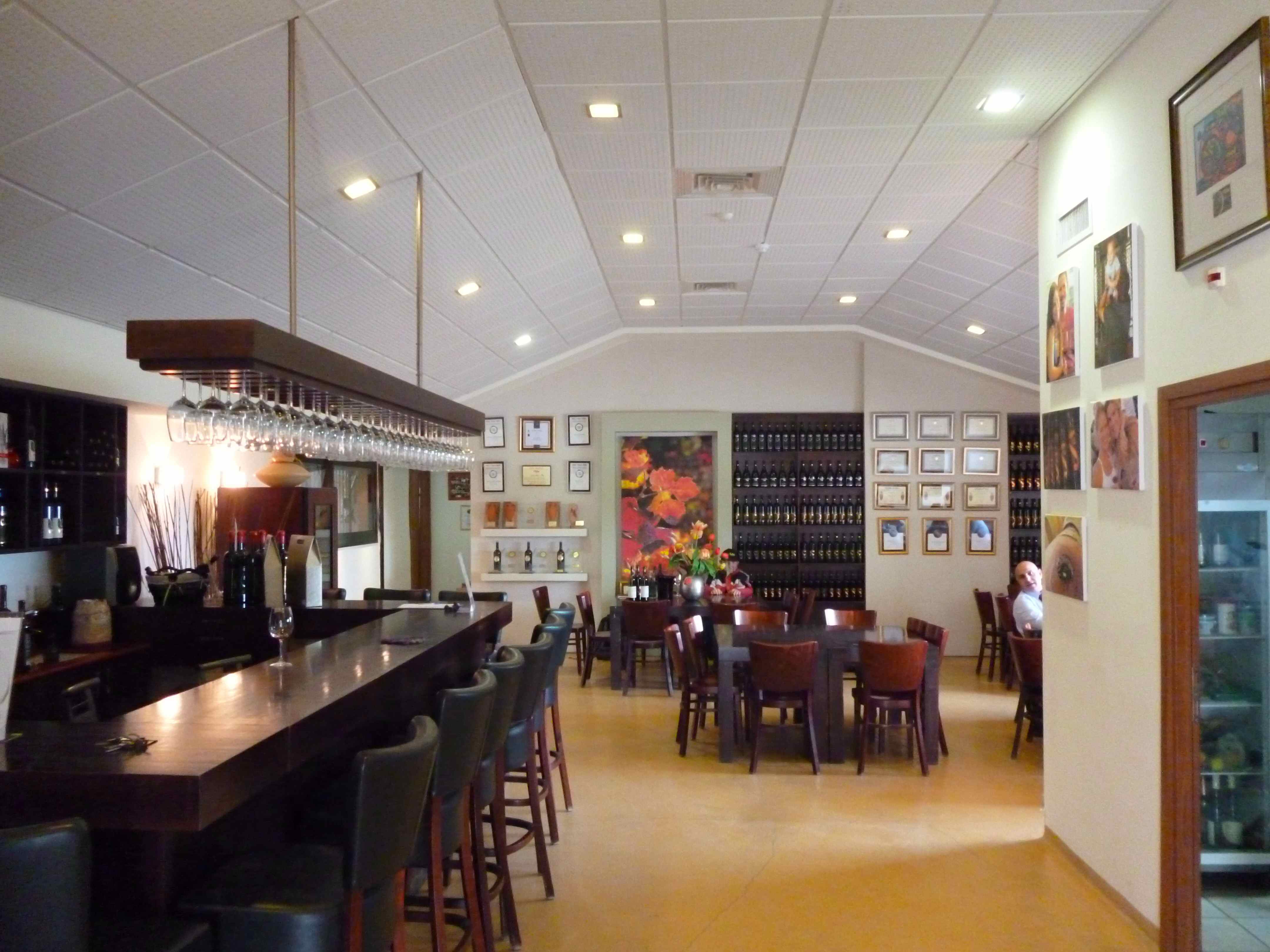
 In 2010 a few wineries went kosher, including Flam Winery and Tulip Winery. I already wrote about the Flam Winery before here and again recently here, but now I am getting the chance to write the story of the Tulip Winery that is rightfully deserves. The tulip winery is a very different beast, a winery that was built in and around a city of disabled individuals and one that takes its advocacy for disabled citizens of Israel quite seriously. I wrote initially about the winery here, but I will take a bit more time to talk about them now, in this space.
Until 2010, Roy Itzhaki, the CEO of Tulip winery would often say that he was the biggest non-kosher winery in Israel. But, not entirely by his own choice. The issue other than having supervision, in this case was the fact that many of the inhabitants of Kfar Tikvah (City of Hope), which is a city for teaching its inhabitants skills to interact with the world around them, work at the winery. Kosher supervision has some issues around disabled people working around wine, for many technical and complicated reasons. That said, in 2010, after YEARS of working hard to make his dual desires a reality, Itzhaki finally succeeded in convincing a kosher supervision that he can make things work. The kosher supervision world is one that is not too fast to take on hard challenges and changes. Still, Itzhaki did not give up and after 20 organizations came and left, they all said the same thing, fire the disabled employees or we cannot help you. Finally, according Deborah Raub, from JNS.org, in an article on Tulip Winery, Itzhaki ran into a Rabbi Chazkal and things changed very quickly. Itzhaki was not going to undermine the very reason for his winery’s existence in Kfar Tikvah, nor was he going to undermine the work and conviction he showed by hiring 30 of its inhabitants to work in his winery. Still, the real reality of business was staring him in the face. He could not continue to produce wine at the scale he was at and not sell them in a kosher wine store, supermarket, or abroad. He had to find a way out of the conundrum, and the rest of the story is the kind of thing that makes me proud of being a Jew!
 Rabbi Chazkal looked at the situation and realized that this was too unique a story and Itzhaki was truly building his winery, its reputation, and advocacy, for altruistic reasons, not for a gimmick or a nice sales pitch. So, Rabbi Chaski advised he come and meet Rabbi Shmuel Vozner with him. As Raub describes, Rabbi Shmuel Vozner is a Rabbi with hardline leanings, but as the story shows, he is also filled with the kind of intelligence and Chachma that makes me so proud to be Jewish. Vozner listened carefully to Itzhaki and said something that none of his 20 predecessors had: “There is a conflict between the mitzvah of halakha and the mitzvah of employing these people. It is such an important mitzvah that you are doing with these people, let’s find a way.”
Reading the story, it was clear that Rabbi Chazkal and Rabbi Vozner were the Chachamim here. Rabbi Chazkal knew that every supervisory organization was not going to take a chance and go out on the limb. Rather they would use the classic hacksaw approach to pruning a rose, way over the top. What was required here was a very precision and tactical approach, something that had not been done before, and something that no organization would do on its own, Rabbi Chazkal knew that the only real answer is to go to a man that had the strength of conviction and Torah and knowledge, that NO ONE would doubt, and let Itzhaki prove his conviction to the man and than if it is meant to be, it will happen. Read the rest of this entry

 Wine Musings Blog