Category Archives: Kosher Wine

Bravdo Karmei Yosef Winery – A World Class Laboratory for Two Renowned Viticulture Professors
 Israel’s wine industry may well be 100+ or a few thousand years old, depending upon how old you are or how deep your convictions run. Carmel winery made a wine, simply called #1, as in those days that was how they labeled their wines. In 1900, at the Paris Fair, it was rated as a gold label wine! A few thousand years before that, wine was made for the temple, wine made in the Judean Hills. Still, the existing rebirth of the Israeli wine Industry, that seemed to go to sleep for some seventy to eighty years, was reborn on the backs of professors like Professor Ben Ami Bravdo, the head wine maker and co-founder of the Bravdo Winery. I think it was Adam Montefiore who stated that the true genius behind the success of the Golan Heights Winery (Yarden), was not only its fine grapes, but the fact that they were smart enough to follow Carmel, in 1983, and hire only wine makers with a degree from renowned universities, like U.C. Davis and Hebrew University. It may sound obvious now, but 30 or more years ago that was not always the case.
 Around that very same time, Ben Ami Bravdo was inaugurated with his now synonymous professor title from Hebrew University. Though even before his official title, he was already teaching students for 16 years on the intricacies of agriculture and viticulture. It is not hard to see how this man is a truly influential figure in the Israeli wine industry, if you do a bit of digging. For some 35 years Professor Bravdo trained hundreds or even thousands of aspiring agriculturalists, including many of Israel’s leading winemakers. Of the four or more existing universities in Israel focusing on agriculture, Hebrew University is the oldest and the most famous.
 When people call a person by their old or past title, such as Senator or Congressman, I always laugh because sure they worked to get that title and rise to the fame that it bestows upon its holder. Still, once they are out of office or power, the title does not fit the holder. With Professor Bravdo, nothing could be further from the truth. For some 40 years, from 1962 till 2001, he trained and studied the effects of viticulture in regards to both the final product; wine, and in regards to the ecology and environment. Bravdo was one of the many scientists who early on spearheaded the usage of drip irrigation in both Israel and abroad for a multitude of applications, including many New World wineries. In 2001 he left the University and was bestowed the Professor Emeritus title, one very befitting his time at the University, and still in the industry.
 It was during his tenure at Hebrew University that he met and later advised, his now wine laboratory partner, Oded Shoseyov. It was Shoseyov’s PhD thesis that fascinated Bravdo, the biochemistry of grape and wine flavor evolution. Together they quenched the thirst of the starving minds that passed through their lecture halls, the very same minds that lead wineries and agricultural powerhouses the world around. Shortly after Shoseyov’s PhD they collaborated on improving and developing viticulture methods for optimizing the grape aromas, as well as experimenting with the chemical properties of the wine must and wine to improve wine and aroma qualities.

2005 Barkan Cabernet Sauvignon Altitude 412+ Reserve
 This past week everything we tried was a semi disaster. We were interested in trying a vegan meatball recipe that we saw on a newsletter from Whole Foods. My attempt of implementing the recipe was a semi disaster, with the meatballs not being able to keep structural integrity. I baked half of them, they could not even keep whole, when you touched them. The ones I braised in the tomato sauce essentially fell apart. To be fair, I added too many onions to the mix, so I take full blame.
We tried to also make some risotto and even that was a semi mess. The risotto looked perfect Thursday night, but it died in the oven on Friday night. They all taste fine, it’s just that the integrity of the vegeballs and the risotto were messed up.
To make matters worse the wine I chose was DAFM (Dead After Five Minutes). To be fair the wine is old and according to Daniel Rogov‘s book, it was to be drunk by 2010. The wine smelled and tasted lovely for five minutes, and after that is smelled like dark cherry and sweet dates, then a few minutes later there was nothing.
I guess it was just one of those weekends!
The wine note follows below:
2005 Barkan Cabernet Sauvignon Altitude 412+ Reserve – Score: N/A as it is now undrinkable
This wine is over, dead, it starts off great, but after 20+ minutes the wine dies. This wine is old and dead, but is alive for 20+ minutes out of the bottle, and then it ends quickly. The wine turns into sweet dates and dark cherry. The wine starts off in the following manner. The nose on this purple to black colored wine starts off with chocolate, tobacco, sweet cedar, blackberry, cassis, and herbs. The mouth on this medium to full bodied wine is rich with cassis, blackberry, raspberry, spice, and tobacco. The mid palate is weak with sweet cedar, black pepper, chocolate, and tobacco. The finish is medium long and spicy with sweet dates, tobacco, chocolate, sweet cedar, cassis, and vanilla. When the wine poops out, it tastes like dark cherry, tobacco, cedar, and dates.

Flam Winery – The venerable European-styled family boutique winery, that is now kosher
 Our culture is very quick to exaggerate for the sake of sensationalism and many in the wine industry press or bloggers have never missed a chance to prove it. Still, every so often we get it right! Use the word boutique in conjunction with a winery, and everyone from Mondavi down to your local corner Garagiste, will lay claim to being one. If you then throw in the terms family owned and European styled, believe it or not, you can still find many who are willing to lay claim to them as well. Thankfully, I was able to spend some quality time at a perfect example of exactly what we are talking about, the Flam Winery, in the rustic Judean Hills.
 In a previous post concerning Ella Valley Winery, I have already discussed what I believe to be the definition of a boutique winery. In a sentence or more, it means a crazy (in a good way) level of oversight from the mundane to the essential. Of course, my take leaves a large enough space to drive a semi-trailer through, as exemplified in these retorts to my post. With that said, to me Flam Winery exemplifies many of the aspects of what I look for when talking about a boutique winery. Yes, they are smallish, at some 120 thousand bottles a year, along with very tight oversight of their vineyards. Flam leases five vineyards throughout the country, three in the Judean hills area and two in the upper Galilee. The vineyards are leased so that Golan Flam, the head winemaker, can work hand in hand with the vineyard manager, and know that they will both get what they want. The vineyard knows it will be paid on a consistent manner, per acre. While, Golan knows that the vineyard will be managed with quality as the benchmark and not quantity. Also, Golan has the opportunity to work hand on with the vineyard manager to maximize the potential of the grapes, in the direction that he thinks is most beneficial to the vineyard and the winery.
 There are a few famous family owned wineries, including Castel Winery in the Judean Hills, and Tulip Winery in the Galilee. Flam Winery, of course is also on the short list of quality family run wineries. Flam Winery, which was started in 1998, is a personification of Golan’s dream to create an Israeli wine estate, focused on premium quality wines. The dream was hatched after graduating from Hebrew University with a bachelor’s degree in agriculture, on a trip through Tuscany, Italy in 1996. While on a fascinating tour amongst the splendid wineries of this enchanting region, Gilad & Golan decided to build a boutique winery in the Land of Israel, which should be surrounded by superb vineyards, and would be the source of the best possible Israeli wines. Golan returned to Italy to get his Master’s degree in Enology, and worked at Carpineto Winery in Tuscany, and in Australia as well. In 1998 Golan returned to Israel to be the wine maker of Flam, and joined forces with his brother Gilad, a successful lawyer and businessman, who runs marketing and Business Development. They recruited their mother, Kami, a successful businesswoman to be the winery’s CFO, and they leaned heavily in the beginning on their father, who was then the head wine maker for Carmel Winery.

Beef Bourguignon made from eye chuck roast and a plethora of Syrah wines
Well after a long hiatus I have finally been able to grab some time for myself and this blog. I have of course been writing wine notes (at cellartracker), just have had no time to get them placed here. So, I rewind us to July 29th, when we had the true joy of many of our friends sharing a meal around our table. The meal started with a lovely bottle of Four Gates Pinot, which was filled with classic CCC (Chicka Cherry Cola) and lovely bramble. The wine was lovely for the first course, which consisted of smoked salmon, spicy hummus and dips.
For the main course we made Beef Bourguignon made from eye chuck roast. I must say that this was the first time we used chuck eye roast, a more expensive cut of the chuck, but it was well worth it. The meat was well marbled, which allowed the meat to stay moist after being cooked for so many hours. I used this recipe, from Daniel Rogov’s culinary site.
Unfortunately, the recipe calls for some fatty goose to be the fat flavor booster (as pork is not kosher), but we had none of that. So, we went with some cubed sausages instead. The main trick is really to allow this dish to happen very slowly. The more time you give the ingredients to marinate, cook, and or cool the better the flavors will come together. The meat was awesome as was the dish, as we had almost no leftovers. The only thing we messed up, was not to remove more of the fat, which we will do next time.
The amount of time it takes to brown 4 pounds of cubed beef is crazy long, and that is why this is one of the easier yet long preparation dishes that we make. We paired the Beef Bourguignon with brown basmati rice, a lovely fresh green salad and some roasted green beans.
The wines we poured that matched this dish were three syrahs that I have been dying to try. The first was the 2008 Syraph One | Two Punch, which we tasted twice back in 2010. This wine did not disappoint us in any way. The wine is still kicking just fine and still has the insanely unique flavor of chocolate mocha covered espresso beans is quite fun and went very well with this hearty dish. That was followed by the 2007 Tishbi Organic Shiraz which was not tasting nearly as well as it did some 5 months ago when we tasted it in the winery. I brought this bottle back myself, and it was a slight disappointment. The nose was crazy good but the mouth was weak and not there. Finally, we had a bottle of the 2004 Yiron Syrah, which is going nowhere anytime soon. This wine is still a massive powerhouse and has at least a few more tannic years under its belt.
The meal was a hit as were most of the wines served. There were a few experimental and barrel wines served, but those notes are not listed here. The wine notes follow below:
 2007 Tishbi Organic Sirah: (Israel, Galilee, Golan Heights) – Score: B++
The nose on this purple colored wine is clearly its strongest suite, it is clean, rich cedar, exploding with plum, strawberry, raspberry, black berries, roasted meat, tobacco, chocolate, a hint of tar, and vanilla. The nose is rich and full, and sadly its best feature. The mouth on this medium bodied wine does follow the nose, but has a blatant flaw,; that being is clear lack of balance. The mouth is mouth coating with nicely integrated tannin, raspberry, black plum, black berries, chocolate, and fig. The mid palate is unbalanced with what can only be called strawberry zest, black pepper, dirt, tar, and tobacco. The finish is nice and long with integrated tannin, dirt, black pepper, black plum, chocolate, rich cedar, tobacco, roasted meat, and vanilla. Cedar, tobacco, chocolate, vanilla, and plum linger long. This wine is DRINK NOW mode, please do not wait any longer.
 2008 Syraph One | Two Punch 50% Grenache & 50% Syrah – (USA, San Luis Obispo Counties) – Score: A-
The nose on this purple-black colored wine is truly unique and very hard to pin down. Sometimes it smells like coffee and sometimes it smells like chocolate. I think it is actually a blend or maybe a mocha espresso, along with ripe blackberry, blueberry, plum, vanilla, smoky, oak, along with crushed herbs. The mouth on this medium bodied wine is layered and concentrated with blackberry, blueberry, vanilla, mocha espresso, nice tannin, and plum. The mid palate spikes with acid, oak, and vanilla. The finish is super long and spicy with chocolate, vanilla, black fruit, tannin, oak, and herbs. Quite a unique and fun wine. This wine has calmed a bit since last year, but the tannins are still not fully integrated.
 2004 Galil Mountain Winery Syrah Yiron Kosher – (Israel, Galilee) – Score: A- to A
To start I opened this bottle because I was told it was drink now time, personally, this beast is going nowhere fast in my opinion. The nose on this purple to black colored wine is exploding with rich and concentrated aromas, rich cedar, baking chocolate, leafy tobacco, hints of tar, heaps of black pepper, smoky notes, coffee, raspberry, blackberry, cassis, plum, crushed herbs, and eucalyptus. The mouth on this super rich and concentrated wine hits you in layers upon layers of still not integrated tannin, licorice, black pepper, blackberry, plum, chocolate, and cedar. The mid palate is balanced with sweet cedar, nice acidity, more nice tannin, tobacco, and chocolate. The finish is super long and spicy with crazy rich cedar, blackberry, crushed herbs, plum, tobacco, chocolate, figs, a hint of tar, with a dollop of vanilla. Black pepper, crushed herbs, chocolate, tobacco, plum, and vanilla linger super long. This wine is in no hurray to be drunk, but is lovely now.
Wines enjoyed during the past month
To say that life has been hectic would be an understatement, so while wine was enjoyed the real joy of writing about them had to be put on hold. Well, things are still hectic, but we now have enough time to sit down and write these up. Over the past month I have had the opportunity to taste some very experimental wine (not written about here), some really wonderful and standout wines that will be available soon, and some wines that are still not available, but was given the chance to enjoy it early on. Of course, we enjoyed some bottles that really impressed us, while others were just – ok.
 So I hope these notes bring you some insight into what wines are coming soon, what wines are out there that are enjoyable, and which ones you should really start drinking up soon.
The wine notes follow below:
2009 Borgo Reale Pinot Grigio Delle Venezie – Score: B
The 2009 Borgo Reale Pinot Grigio is a nice simple white wine that is clearly a wine built for enjoyment with our without food. The nose on this straw-colored wine is striking with rich peach, intense lemon, apricot, grapefruit, light floral notes, green apple, lemon rind, and mineral. The mouth on this light to medium-bodied wine is nice and bright, with lemon, green apple, and peach. The mid palate is packed with bright acidity, lemon, something that can only be explained as vanilla, lemon rind, and floral notes. The finish is spicy and medium long with more rich lemon, apple, mineral, peach, and lemon rind. Green apple, lemon, floral notes, and mineral linger long.
 2006 Covenant Cabernet Sauvignon Red C (Kosher) – Score: A-
I must admit that the last time we had this bottle it was down right DOA, this one differs greatly, and it was a much appreciated surprise.
The nose on this purple to black colored wine is smoky and screams with tobacco, chocolate, tar, alcohol (to start), graphite, rich cedar, blackberry, ripe plum, raspberry, fig, mint, and herbs. The mouth on the medium to full-bodied wine is rich and layered with mouth coating integrated tannins, blackberry, plum, raspberry, fig, mint, and cedar. The mid palate follows the mouth with balanced acidity, chocolate, tobacco, tar, more cedar, and  black pepper. The finish is super long and spicy with rich blackberry, plum, vanilla, herbs, chocolate, tar, tobacco, black pepper, and salty celery. The tar, tobacco, plum, black pepper, and salt rise on the finish and linger long.
N.V. Four Gates Pinot Noir Kosher – Score: B++ to A-
The nose on this dark ruby colored wine explodes with cloves, spice, dirt, celery, chicken cherry cola, raspberry, plum, herbs, coffee, and menthol. The mouth on this medium bodied wine is rich and layered nice chicken cherry cola, plum, and raspberry, along with heavy spice, and mouth coating tannin. The mid palate, like all four gates wine is balanced with bracing acidity, more dirt, nice tannin, crushed herbs, eucalyptus, and oak. The finish is long with chicken cherry cola, crushed herbs, dirt, celery, spice, raspberry, oak, coffee, and vanilla. Chicken Cherry Cola, crushed herbs, and vanilla rise on the finish.

Second days of Passover meals and wines…
To celebrate the end of Passover, we had friends join us for two of the four meals on the last days. We spent the entire Sunday cooking, and while it was crazy work, it was a ton of fun. We had a TON of help from our friends who were spending Passover with us, so MANY thanks to them!!
Sunday Night Menu:
Herb Encrusted Baked Gefilte Fish Loaf
Eggplant salad
Quinoa
Passover Meatballs
Kugel
Fresh Salad
Wine Menu:
Leftovers of Elvi Ness Blanco and Yarden Pinot Noir from Saturday
Monday Day Menu:
Baked Gefilte Fish Loaf
Eggplant salad
Stuffed Vegetables
Kugel
Fresh Salad
Wine Menu:
 2003 Carmel Shiraz, Single Vineyard, Kayoumi – (Israel, Galilee, Upper Galilee) – Score: A-
As one peers into the inky black colored depths of this wine with purple halos you are immediately met with waves of tobacco, tar, licorice, black pepper, oak, espresso coffee, roasted meat, blackberry, cassis, plum, and herb. The mouth on this full bodied wine is rich, lovely, and concentrated with blackberry, cassis, roasted meat, plum, lovely integrated tannin, and herb. The mid palate flows off the mouth with balanced acid, oak, lovely tannin, tobacco, and tar. The finish is super long with nice tannin, oak, black fruit, black pepper, dirt, herb, and licorice.
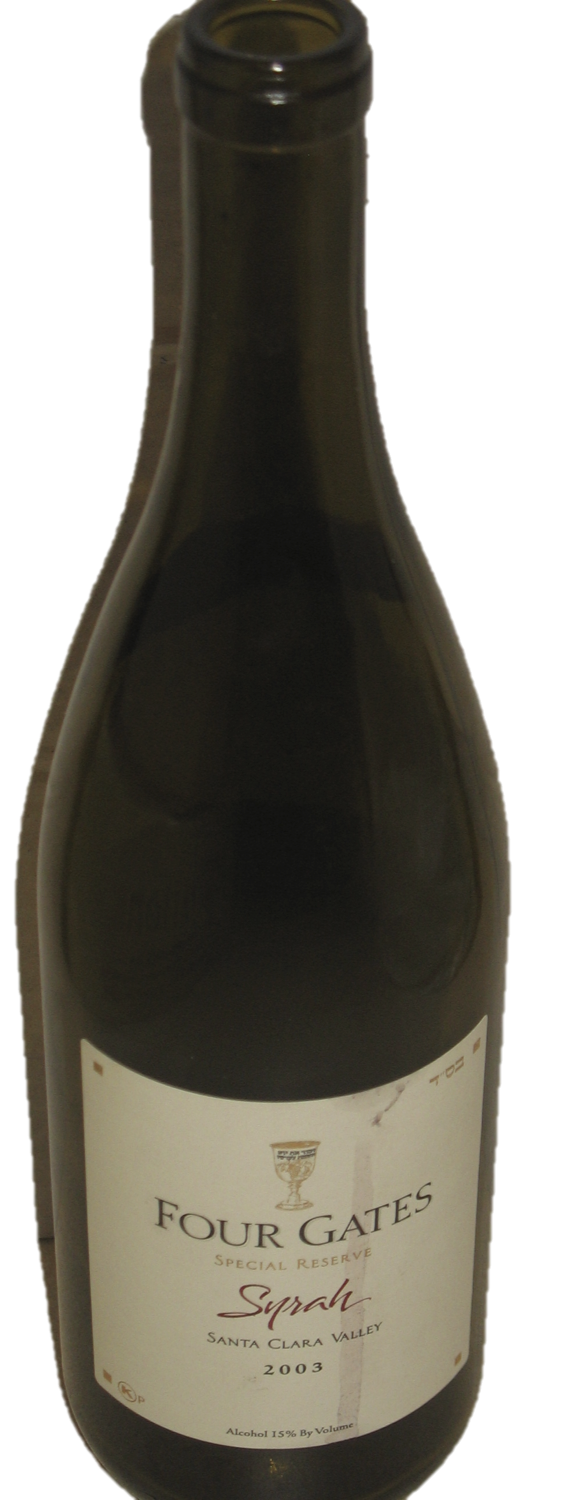 2003 Four Gates Syrah, Special Reserve – Score: A- to A
This wine continues to impress and is keeping strong to my previous notes. The first thing that hits you when you open this bottle of wine and peer into its purple-black stare is the ripe blueberry notes that come screaming out at you, along with blackberry, cassis, plum, tobacco, chocolate, tar, and rick oak. The mouth on this full bodied, mouth filling, concentrated, and inky structured wine comes at you in layers with fruit that follows the nose, ripe blackberry, plum, cherry, blueberry, inky black tar, and oak. The mid palate is balanced with acid, oak, tobacco, and chocolate. The finish is super long, black, and spicy, with rich oak, chocolate, tobacco, tar, and blackberry. This is a truly wonderful wine that is highly structured with lovely tannins and a wine that still has a few years left under its belt. The nose is killer with the lovely ripe blueberry and blackberry, along with the oak, tar, and chocolate. It follows through with the mouth till its tantalizing finish. Quite a powerful wine that still has its sea legs beneath it and one that has a bright horizon ahead of it.
Sulfites, Cilantro, and Or Haganuz Elima – Sulfite free wine
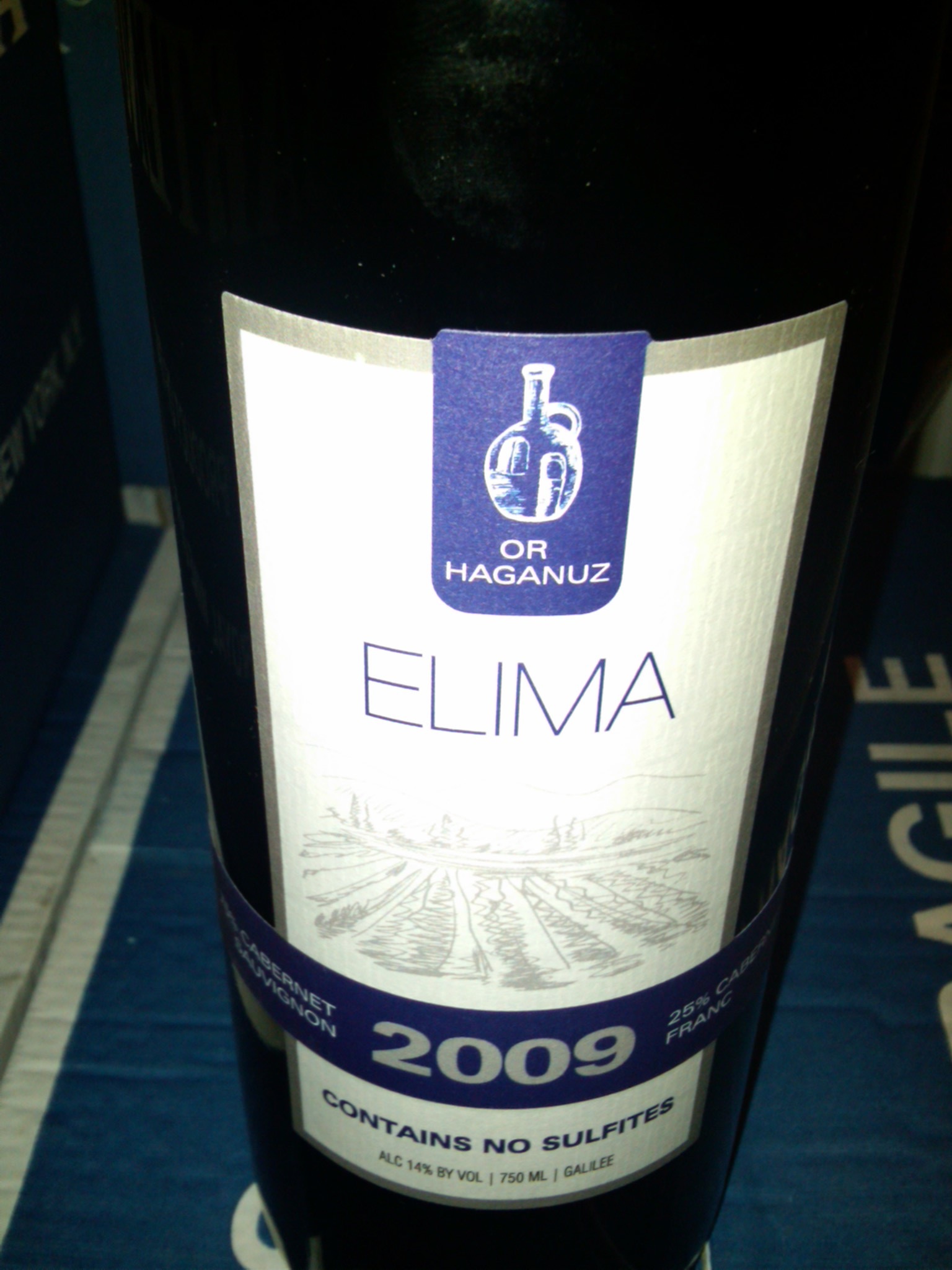 We have spoken before about sulfites when I posted an article, about the then ONLY Kosher Sulfite Free wine that I knew of. The Bashan Winery is a lovely small winery in the Galilee that only produces sulfite free wine.
So what is Sulfites? They are nothing more then a preservative for wine. They were added into wine staring in the last century or so. Before then people got along fine without using them – why? Because sulfites occur naturally in wine. The extra sulfites one may add allow for the wine to stay on the shelf or in the cellar longer. So most wine makers that bottle organic wine will say that white wines should be drunk within the year and within the day of opening it. Red wines have a bit more life to them – 5 years or so, as sulfites are far more prevalent in red wines.
Many wineries have wines made from organically grown grapes – this is a trend that many wineries are trying to push, in ways as part of the whole natural wine story. Also, because organic grapes are more than just a selling point, it because organic grapes are good for the vines, the vine workers, and ultimately, the customer.
When we talk about sulfite free wine, it does not always mean organic wine! In the USA, the rules are VERY simple, you CANNOT add any preservatives in ANY manner – as described here, (sorry the data is in a PDF) on the USDA website, if you wish to put the word Organic on the wine label. An organic wine means ZERO SO2 was added to the wine at any time in the processing of the wine. The wine will still have sulfites, unless they were fined out, because sulfites occur naturally in the grape skins.
 So why all the buzz around sulfites in wine? Because some people are supposedly allergic to the sulfites. What is the percentage of people with this ailment? The USDA describes it as 1/100 as stated here, far fewer people than the percentage of folks who think Cilantro is the Devil’s spawn.
Unfortunately, I missed the chance to taste this brand new wine that is being imported into the USA by Happy Hearts, wine importers. The wine is made by the Or Haganuz Winery, which was founded in 2005. The winery can be found in the Upper Galilee village of Or HaGanuz, the winery lies about six kilometers north west of Sefad and at the foothills of Mt. Meron (taken from Rogov’s site). It is 75% Cabernet Sauvignon and 25% Cabernet Franc. From the rest of the scores, maybe this wine is not worth the price. I saw it at a wine shop going for some 35 or so dollars! I guess since they have the monopoly in sulfite free kosher wine, they think they can charge whatever they want…
Chime in if you have tested it, I would love to know…


 Wine Musings Blog