Blog Archives

Awesome kosher meatball recipe, lovely sauces, last 2009 HaSod Cabernet Sauvignon, and 2010 Tierra Salvaje Pinot Noir Reserve
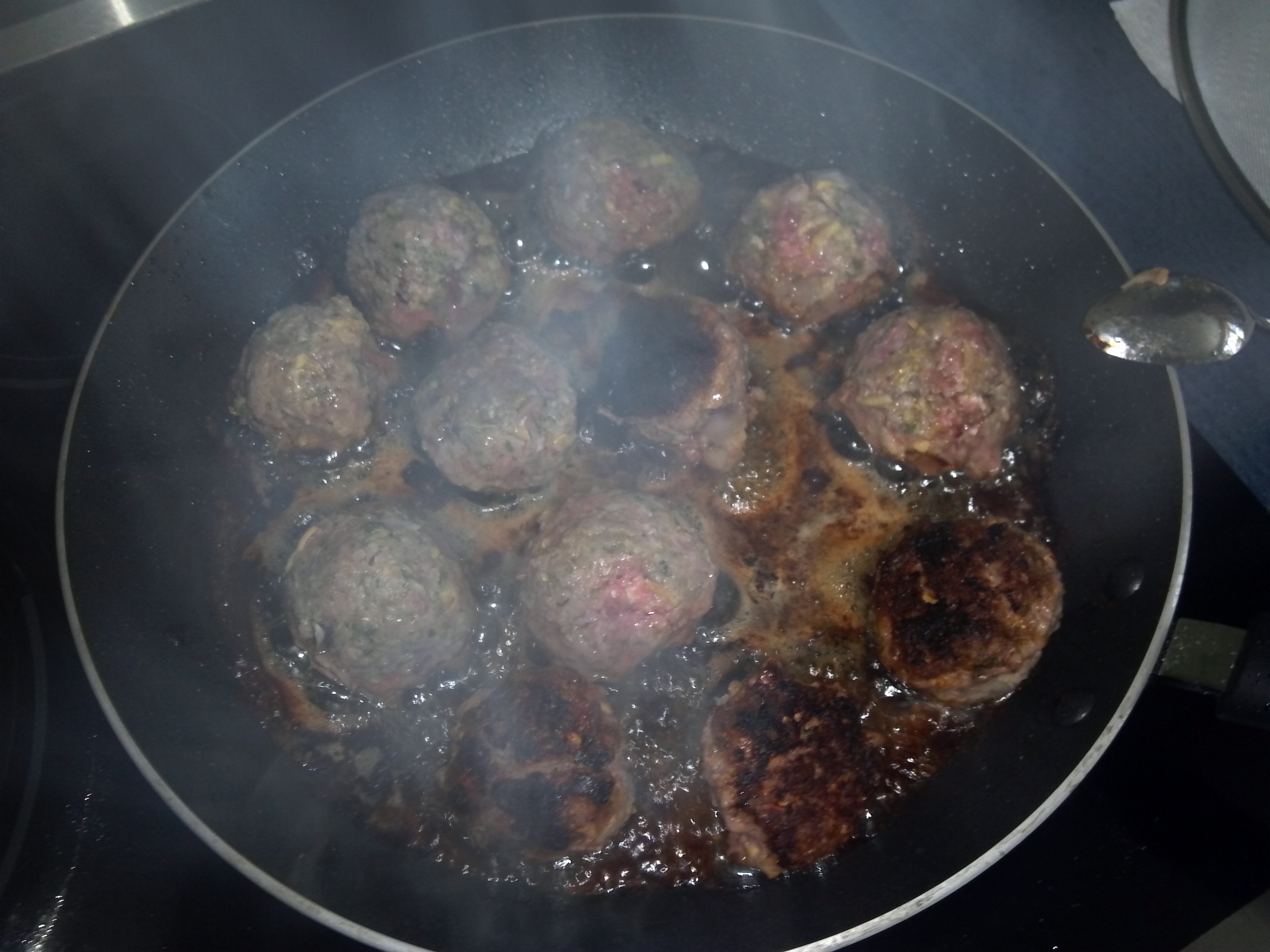 This past weekend, I was on a mission from God (in my mind anyway) to make the best possible meatball possible. My wife thinks I have gone crazy, because to her the meatballs we have made in the past were fine to her, and they are. Still, my quest to make the perfect meatball cannot be quenched, though this past iteration was quite possibly my best. There are some more tweaks we will need to do, but more on that soon. Now I wanted to make a single meatball recipe, but two different sauces. Why? Simple, my wife was not interested in a meat based sauce, and I did. Now the only con to frying meatballs is that the sauce you make has no meat flavor in it. Yes, the onions and base can start from the fat that is rendered from the fried meatballs, but that still does not cut it. A true meat sauce requires meat flavors to be fully integrated in the sauce, via cooking and reducing with the meat, thereby concentrating the meat and tomato flavors, in combination. Further, I was NOT going to braise the meatballs after I went to the trouble of frying them and getting them nice and crunchy to only lose that in a pot of sauce!
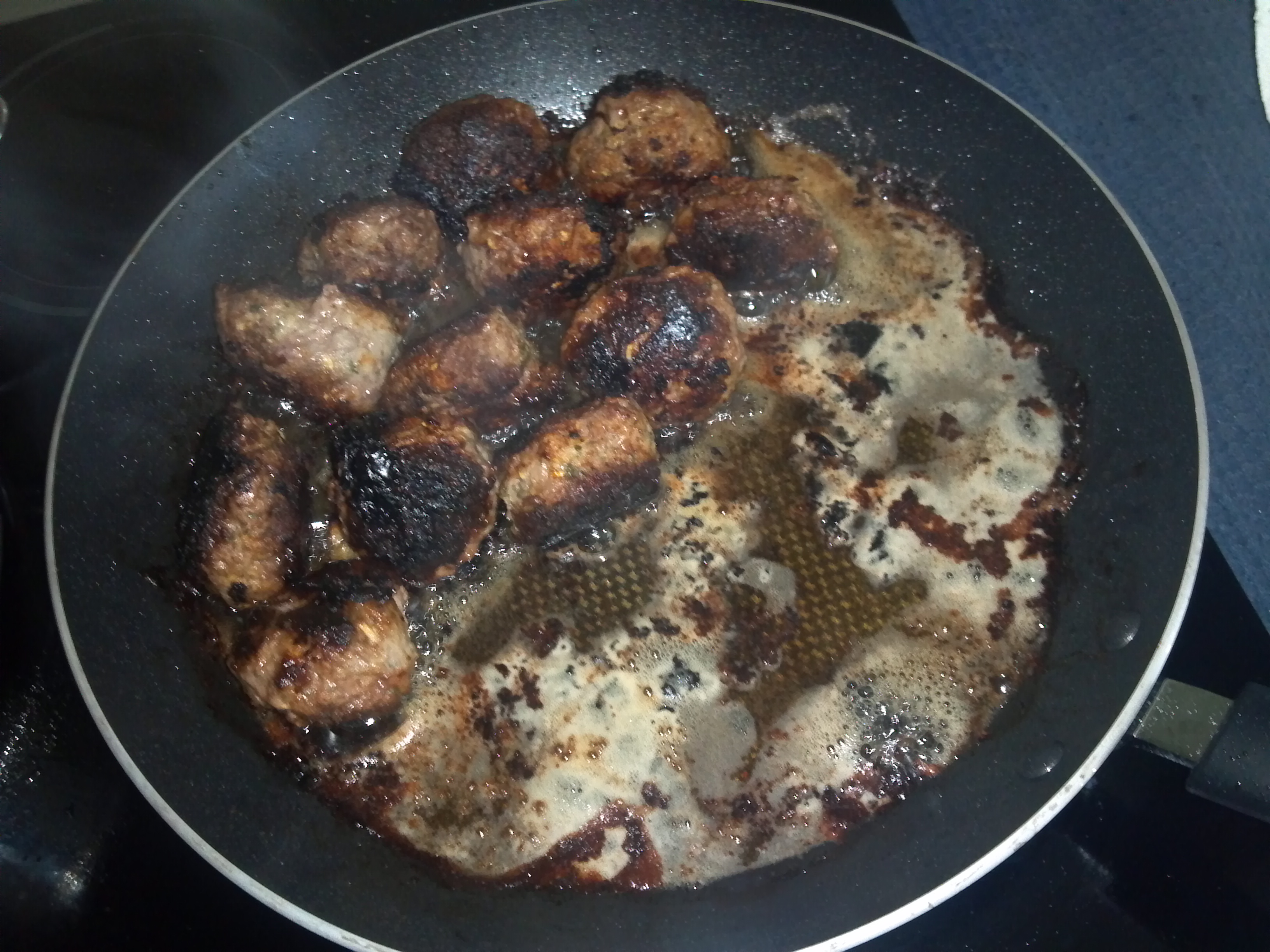 So, I was left with the trouble of cooking two sauces, one with the rendered fat and one without. To get the rich meat flavor, I further rendered the fat of Nechama’s Smoked Andouille sausages (made from turkey and chicken), and then cooked them in the completed tomato sauce, to enrich the sauce with a lovely bit of heat and meat flavor. While this was successful, the extra sausages did not render well enough for me, and the extra steps were not worth the final outcome.
For the meatball recipe, I used a further modified version of the classic meatball recipe from America’s Test Kitchen:
- 1 cup of cooked but slightly watery oatmeal (cooled down) – this is the panade
- 2 pounds of 85% lean ground beef
- 6 oz. Aarons Best Sliced Beef Fry Cured & Smoked – well diced
- Two cups of squeezed shredded onions and zucchini – WELL SQUEEZED out
- 4 tablespoons minced fresh parsley
- 2 eggs
- 3 garlic clove, minced
- 3 tablespoons of paprika and cumin (combined)
- Salt and pepper
- Vegetable oil Read the rest of this entry
Welner Wines sells to the under 10 dollar wine segment with Panache, Chutzpah, and Quality
I have yet to have the honor to meet Shimshon Welner, in person, but Mr. Welner was very kind to take the time from his very busy schedule, as you will see soon, to talk with us about the kosher wine industry as a whole, his wine company, and the underserved market for kosher quality wine under 10 dollar. As you talk with Mr. Welner you cannot help but be impressed by his obvious passion for this industry, but also for his equally obvious self confidence and knowledge when it comes to selling into the ever growing kosher wine market.
I have recently been talking with my friends about the kosher wine market, the plethora of options, and the deep and real fear I have around the number of wineries going kosher. In Israel, for the longest time, the majority of wineries were non-kosher, while the majority of wine sold in Israel was kosher. That being on account of the largest wineries being kosher, who produce over 90% of wine in Israel:
- Carmel
- Barkan- Segal
- Golan Heights (Yarden)
- Teperberg
- Binyamina
- Galil Mountain
- Tishbi
- Dalton
- Tabor
- Recanati
Many if not all of these wineries started off kosher, for a myriad of reasons, with a strong contributor being the ability to sell the wine to anyone and anywhere. That is a fair amount of wine that needs to be sold to an already well defined and limited group of Jews. Yes, religious Jews are buying wine more than they used to, still more and more wineries are starting kosher wine production. Many of them producing wine in the category that I call “death valley”, the wines with a rating of 84-90, that cost anywhere from 18-30 or more dollars. The scary part, is that the very large majority of all kosher wine out there fall either below 85, which makes it almost unsellable, or above it, but at a price point that just adds more product to the already yawning gap of under 90 point wines. Above 90, people have a desire to try it a few times, and may well continue to buy the wine, if they like it. Under 90, the wine will be bought maybe once as a way to try something different, but once they realize the product is inferior, they will not buy it again. So why the fear? Because 10 years ago, we would have been begging and screaming for this potential nightmare, but now it is getting to be a real potential problem.
You see there are three legs to the wine selling business, price, quality, and consumer. If you have a low priced and high quality wine that anyone can drink – you have no problems. If you have a high priced and low quality product that anyone can drink, you have some issues. If however, you have a low quality product with a high price and even lower consumer base, by not making the wine kosher, you are in deep trouble. You see, there are many hundreds of thousands of bottles of wine out there that a non-kosher wine market can sell, and they are often better and cheaper than their kosher counterparts. There lies in the conundrum that I am deeply fearful of. That is why I was so excited to speak with Mr. Welner. Read the rest of this entry
2008 Tierra Salvaje Chardonnay Estate Bottled – Wine Notes
This wine was used as the base for a wonderful Roasted Butternut Soup that we make. That said, it is still a wonderful wine, it was just the easiest bottle to get to. The wine is showing a bit better (in some ways) than the last time we tasted it, more than a year ago. In other ways, the wine is receding, given its Mevushal status and age. A fair amount of the astringency and green notes have dissipated, but there is still a green halo that hovers over the wine both in color and flavor. I liked it but I think it is drink up time!
2008 Tierra Salvaje Chardonnay Estate Bottled – Score B to B+
The nose on this brilliant golden colored wine with green halos is almost sweet with some vegetal leanings, lemon, green apple, spice, peach, hay/straw, and herbs. The mouth on this medium bodied wine is almost mouth filling with spice, green apple, lemon, orange rind, peach, and pear. The mid palate is acidic and dry, with orange rind, and herbs. The finish is long and spicy with peach, lemon, spicy notes, and a long appealing lingering of orange rind, spice, and cut grass. A nice bottle that has settled down and may now actually be more appealing to more people, but also a bottle on its way down – drink up!!

 Wine Musings Blog